

In electrical distribution design, 125A is a rating that’s hard to avoid. It covers the vast majority of scenarios from small-to-medium industrial equipment to commercial building sub-circuit protection. Precisely because of this, the moulded case circuit breaker (MCCB) market in this range is fiercely competitive. Amidst the noise, what procurement professionals really need isn’t flashy marketing—it’s a set of real, reliable specifications they can understand and trust.
The CJMM3-125 3P 125A Moulded Case Circuit Breaker from Zhejiang C&J Electrical Co., ltd. (C&J Electrical) is exactly that: a product that lets its specs do the talking. It belongs to the 125A frame size within the CJMM3 series, offering a “just right” solution for distribution scenarios requiring reliable short-circuit and overload protection. For projects that also require residual current protection, C&J Electrical offers a complete range of RCCB and RCBO products, forming a comprehensive solution from main distribution to final circuit protection.
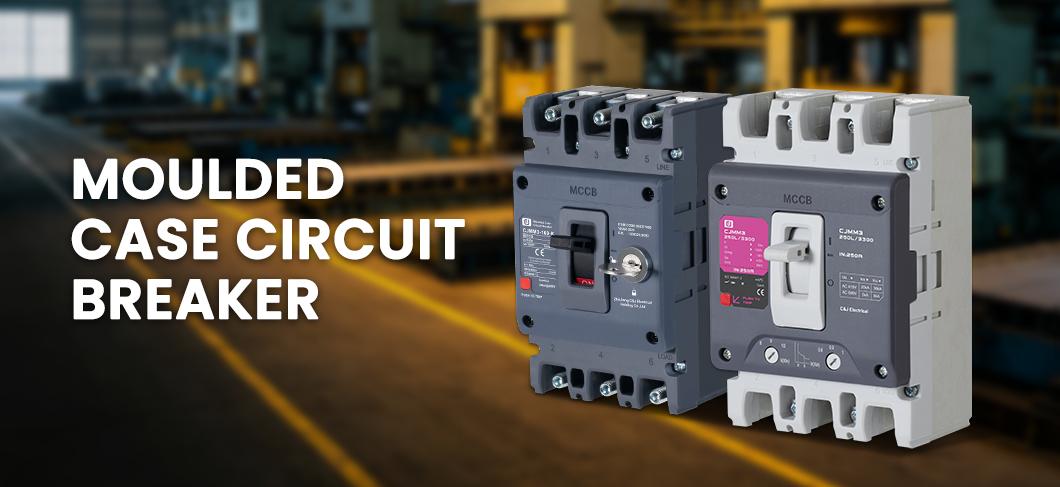
Product Overview: An MCCB Built for Practical Selection
Start with its rated insulation voltage of 1000V. This means that even in systems with significant voltage fluctuation, the product retains ample safety margin. And its flashover distance of ≤50mm directly affects panel size and layout design in projects where enclosure space is tight—a frequently overlooked yet highly practical metric.
The CJMM3-125 has a rated working voltage of 400/415V and is available in a 3-pole configuration. In terms of rated current, it covers 16A, 20A, 25A, 32A, 40A, 50A, 60A, 80A, 100A, and 125A—10 ratings in total. This means that whether you’re dealing with a small distribution box or a medium-sized control panel, you can find a matching specification within this range.
Core Specifications at a Glance: The CJMM3-125 in One Table
|
Parameter |
CJMM3-125S (Standard) |
CJMM3-125H (Higher) |
|
Frame rated current |
125A |
125A |
|
Rated current range |
16A, 20A, 25A, 32A, 40A, 50A, 60A, 80A, 100A, 125A |
16A, 20A, 25A, 32A, 40A, 50A, 60A, 80A, 100A, 125A |
|
Rated working voltage |
400/415V |
400/415V |
|
Rated insulation voltage |
1000V |
1000V |
|
Ultimate short-circuit breaking capacity (Icu) |
25kA |
35kA |
|
Operating short-circuit breaking capacity (Ics) |
18kA |
25kA |
|
Number of poles |
3P |
3P |
|
Flashover distance |
≤50mm |
≤50mm |
The table makes the core difference clear at a glance: Type H delivers a 40% increase in Icu and approximately 39% increase in Ics over Type S. This difference determines where each is best applied. Type S suits conventional distribution sub-circuits where fault current is moderate, while Type H is better suited for locations closer to the transformer or where available fault current is higher.
The key to selection isn’t “which one is more expensive”—it’s accurately estimating the expected fault current at the installation point. If your estimate is conservative, Type S is more than capable. If your estimate leans aggressive, Type H provides greater safety margin.
A Practical Selection Guide: Matching the Right Breaker to the Right Job
Choosing the right MCCB involves more than just picking a current rating. Here’s a step-by-step approach to make the decision process clearer.
Step 1: Determine the load current. Calculate or estimate the maximum continuous current your circuit will carry. For a 125A frame, this could range from a small 16A lighting circuit to a full 125A feeder. Match the rated current of the breaker to your load, ensuring it’s neither too low (causing nuisance tripping) nor too high (leaving circuits under-protected).
Step 2: Estimate the available fault current. This is where S-type and H-type selection comes in. If your installation is relatively far from the transformer, or the transformer capacity is modest, Type S with 25kA Icu is likely sufficient. If you’re close to the transformer or working with a larger system, Type H’s 35kA provides the necessary safety margin.
Step 3: Choose your wiring and operation method. Consider how the breaker will be installed and operated. Front-board wiring is the most common for panel builders. Rear-board wiring saves space in compact enclosures. Plug-in and draw-out types offer easier maintenance and replacement. For operation, direct handle is simplest, while electric operation enables remote control and automation.
Step 4: Select accessories. Based on your control and monitoring needs, decide whether you need alarm contacts, auxiliary contacts, shunt releases, or undervoltage releases. These can be specified at the time of order.
Step 5: Confirm environmental conditions. Ensure the installation site meets the operating requirements: altitude ≤2000m, ambient temperature between -5°C and +40°C (with 24-hour average ≤+35°C), and pollution degree 3. If conditions differ, consult with us for appropriate solutions.
Functional Features: More Than Just “Tripping”
As an MCCB, the CJMM3-125′s core function is, of course, overload and short-circuit protection. But its design details deserve a closer look.
Inverse-time characteristics for overload protection. According to the product’s technical data, the overcurrent release for distribution circuit breakers features standard inverse-time operating characteristics. When all poles are energized simultaneously, the agreed non-tripping current is 1.05 times the rated current, and the agreed tripping current is 1.3 times the rated current. This means that within the agreed time of 2 hours (for rated currents above 63A) or 1 hour, the breaker can accurately distinguish between “normal overload” and “faults requiring disconnection,” avoiding nuisance tripping.
Precise instantaneous trip setting. The instantaneous operating characteristic for distribution breakers is set at 10In ± 20%. This setting directly affects the sensitivity of short-circuit protection and coordination with downstream devices.
Flexible accessory expansion. According to the product category, the CJMM3-125 can be configured with alarm contacts, auxiliary contacts, shunt releases, undervoltage releases, and other accessories as needed, providing expansion space for different control and signaling requirements.
Multiple wiring and operation options. The product supports front-board wiring, rear-board wiring, plug-in type, and draw-out type. Operation can be via direct handle, turning handle, or electric operation. This flexibility means it can adapt to different installation environments, from simple distribution boxes to complex switchgear assemblies. In terms of pole count, beyond the standard 3P configuration, 2P and 4P options are also available depending on requirements.
Application Scenarios: Where Does It Fit?
The CJMM3-125 covers several typical application areas.
Commercial building distribution sub-circuits. In floor distribution boxes of office buildings, shopping malls, and hotels, 125A MCCBs are commonly used for lighting, HVAC, and power socket circuit protection. The 3P configuration combined with ≤50mm flashover distance allows for compact panel layouts.
Small-to-medium industrial equipment distribution. As a main switch or branch protection in motor control panels, the CJMM3-125′s 125A ceiling covers a substantial range of small and medium motor distribution needs. Its inverse-time overload characteristics offer good coordination potential with motor starting profiles.
Critical infrastructure end-distribution. In data centers, hospitals, and similar facilities where supply continuity matters, MCCB reliability directly impacts system availability. For final circuits requiring residual current protection, C&J Electrical’s RCBO products can be paired to achieve combined overload, short-circuit, and earth leakage protection.
Note the normal working conditions: Installation site altitude should not exceed 2000m; ambient air temperature upper limit should not exceed +40°C, with a 24-hour average not exceeding +35°C, and a lower limit not below -5°C; pollution degree is 3. Special environmental conditions should be indicated at the time of ordering.
Why Choose the CJMM3-125 from C&J Electrical?
Beyond the specs themselves, here are some practical reasons worth considering.
Comprehensive range for confident selection. With 10 rated current options from 16A to 125A, two breaking capacity levels (S/H), and multiple wiring and operation options, it covers virtually all common requirements in the 125A class.
OEM brand customization supported. We support OEM brand customization services. Multiple specifications are available, application scenarios are broad, and safety performance is high. SKD (Semi-Knocked Down) shipment is also supported. If you have your own brand or need knocked-down parts to reduce logistics costs, reach out to us directly.
If you’re looking for a 125A MCCB with solid specs and flexible selection options for your next distribution project, the CJMM3-125 deserves a place on your shortlist. If you have any questions or needs, please feel free to contact us.
About Zhejiang C&J Electrical Co., ltd.
Zhejiang C&J Electrical Co., ltd. (C&J Electrical) specializes in the research, development, and manufacturing of high-quality low-voltage electrical products, covering MCB, MCCB, RCCB, RCBO, and related categories for the global distribution market. We are committed to providing partners with reliable products, flexible customization options, and responsive technical support.
Post time: Sep-17-2026