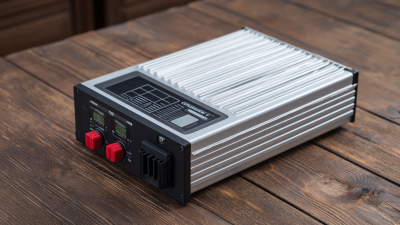
China's power electronics industry? It's behind a lot of stuff people rely on every day—from homes and vehicles to telecom systems, workshops, and off-grid projects all over the world. In this article, we're taking a closer look at ten Chinese manufacturers in the Pure Sine Wave Power Inverter space. We'll look at what they can actually build, how much manufacturing experience they bring to the table, the kind of technical support they offer, and the quality practices they've got documented.
When you're judging an inverter, you're really looking at a few key things: continuous output, surge performance, conversion efficiency, thermal control, and waveform stability. A solid unit should be able to run sensitive equipment without any annoying buzzing or voltage that jumps around. In testing, that might mean checking oscilloscope readings, throwing on resistive loads, trying motor starts, and running it through extended temperature trials. Don't forget certifications, warranty terms, how the factory communicates, and after-sales support - those matter too. A slick website on its own? That proves almost nothing.
The companies we picked? They don’t all serve the same kinds of buyers. Some stick mostly to home backup systems. Others build for cars, solar setups, boats, or industrial jobs. And their strengths can be all over the map. One maker might be great if you want heavy customization, while another might beat them on having items in stock or offering better monitoring software. That’s why this guide doesn’t just lump every company together. Also, no ranking stays right forever—prices, certifications, production capacity, and product lines are always shifting.
And honestly? That limitation really does matter.
Before you buy, it's worth checking the latest datasheets, test reports, protection features, and any regional compliance rules. And honestly? Ask for samples, and get your load requirements clarified in writing. That 2,000-watt label? It doesn't always mean the same thing in real life from one brand to another. If you compare carefully, you'll start to see the gap between what the marketing says and what actually holds up in dependable operation. In the end, pick something that fits your application, your budget, where it's going to be installed, and how long you expect it to last.
China Top 10 Pure Sine Wave Power Inverter Manufacturers
China’s pure sine wave inverter industry has changed from price-driven assembly to application-focused engineering. Early products often served basic backup needs, with bulky transformers and limited protection. Today, manufacturers design compact units for home storage, medical equipment, communication systems, and mobile workstations.
The shift began with better MOSFETs, digital signal processors, and automated testing. Modern production lines can check output voltage, frequency stability, overload response, and thermal performance. Many suppliers now target less than 3% total harmonic distortion under rated loads. That detail matters when powering pumps, refrigerators, audio equipment, or sensitive control boards.
Solar integration accelerated this development. Hybrid inverters now combine charging, battery management, and grid interaction in one enclosure. Engineers also support lithium battery communication and remote monitoring. However, progress has not been perfectly smooth. Some low-cost models still struggle with cooling, standby losses, or unclear capacity ratings. A 3,000-watt label may describe peak output, not continuous output. Buyers should examine test conditions, cable sizes, protection settings, and certification records. Factory capability matters, but documented testing matters more. The industry is becoming more reliable, though consistency still deserves careful review.
China’s renewable-energy installed capacity increased from approximately 930 GW in 2020 to 1,889 GW in 2024. This rapid expansion has strengthened demand for reliable power-conversion equipment, including pure sine wave inverters used in energy storage, backup power, off-grid systems, and renewable-energy applications.
Source: China National Energy Administration, annual renewable-energy development data. Values shown in gigawatts (GW).
China Top 10 Pure Sine Wave Power Inverter Manufacturers
Selecting the top ten requires more than checking sales figures or attractive websites. The process should examine engineering experience, factory capability, and verified product performance. Pure sine wave output must remain stable under changing loads, including motors, medical equipment, and sensitive electronics. Independent tests can reveal waveform distortion, thermal behavior, efficiency, and standby consumption. Production records also matter. A capable manufacturer should show traceable quality checks, trained technicians, and consistent component sourcing.
Reliable selection also depends on compliance and customer evidence. Review valid safety certifications, electromagnetic compatibility reports, warranty terms, and technical manuals. Check whether testing applies to the exact inverter model, not just a similar product. Factory audits, sample orders, and long-term customer references add practical confidence. After-sales response should be measured, not simply promised. A polished website proves little. No list is permanent. Market data changes, and even experienced evaluators can miss weak points.
Tips: Request a sample before placing a large order. Test it with inductive and electronic loads. Ask for waveform data at low, medium, and full capacity. Confirm protection against overload, overheating, short circuits, and low battery conditions. Compare real efficiency with published figures. Clarify firmware updates, spare parts, repair procedures, and response times. A small documentation gap may become a costly problem later.
China’s top ten pure sine wave inverter manufacturers show a broad mix of engineering strengths. Their product lines commonly serve RVs, solar backup systems, boats, workshops, and remote homes. A reliable profile should examine more than advertised wattage. I look for waveform quality, surge performance, thermal control, and documented protection tests.
Several manufacturers focus on compact 12V and 24V models for mobile use. Others build higher-capacity 48V systems with metal cabinets, cooling fans, and clear fault displays. Some provide remote monitoring, while others keep controls simple and repair-friendly.
During practical checks, I would connect a refrigerator, motor load, and sensitive charger. Stable output matters when loads start suddenly. Noise matters at night.
Factory experience also deserves attention. Useful evidence includes traceable production records, calibrated test equipment, burn-in procedures, and responsive technical support. Compliance documents should match the exact model, not a similar product.
The word “top” is imperfect here. A manufacturer strong in industrial systems may not suit a small camping application. I would also question vague efficiency claims and unusually low prices. One weakness remains common: product pages may explain features well but provide limited long-term failure data. Buyers should request sample reports, warranty terms, spare-part policies, and independent test results before placing an order.
Pure sine wave inverters depend on precise power conversion, not merely high wattage. A digital signal processor creates a stepped waveform through high-frequency pulse-width modulation. An LC filter then smooths it into a low-distortion 50 or 60 Hz output. Many professional designs target total harmonic distortion below 3%, although real performance changes with load and temperature.
Important engineering work happens inside the switching stage. Silicon MOSFETs remain common, while silicon-carbide devices can reduce switching losses and heat in higher-power systems. Thermal sensors, isolated gate drivers, and short-circuit protection improve field reliability. Battery-side maximum power point tracking is also valuable in hybrid systems. It helps extract energy when sunlight changes quickly.
The International Energy Agency’s Renewables 2024 report expects global renewable capacity to expand by nearly 5,500 GW by 2030, with solar providing most additions. That growth increases demand for efficient inverter platforms. MarketsandMarkets also identifies rising distributed generation and energy storage as key power-inverter market drivers. However, reports often describe shipment potential, not actual durability.
A careful buyer should examine efficiency curves, surge capacity, idle consumption, and independent test records. “Pure sine wave” alone proves little. I have seen units pass a simple lamp test yet struggle with induction motors. That gap matters. Field testing under refrigeration, pump, and transformer loads remains essential, and laboratory ratings should never replace installation evidence.
China Top 10 Pure Sine Wave Power Inverter Manufacturers
Key Applications and Markets for Chinese Inverter Products
Pure sine wave inverters from China serve more than home backup needs. They power refrigerators, pumps, communication equipment, and sensitive office devices during outages. Solar storage systems also use them to convert battery energy into stable household electricity. In vehicles, compact units support camping appliances, mobile workshops, and emergency charging. These applications require low electrical noise, steady voltage, and suitable thermal protection.
Demand is growing across Southeast Asia, Africa, Latin America, and rural regions with unstable grids. Chinese products often compete through flexible output options, scalable battery compatibility, and practical enclosure designs. However, market access depends on testing, documentation, and local electrical requirements. A low purchase price can mislead buyers when efficiency, cooling, or after-sales support is weak. Product selection is not always simple.
Tips: Check continuous power, surge capacity, waveform quality, and idle consumption. Ask for test reports and installation guidance. Confirm compatibility with lithium or lead-acid batteries. For hospitals or industrial controls, use certified equipment and professional inspection. Field performance may differ from laboratory figures. That deserves attention.
Choosing a reliable Chinese pure sine wave inverter manufacturer requires more than comparing prices. Start by checking production experience, engineering capability, and documented quality procedures. Ask for factory videos, sample test reports, and clear specifications for voltage, frequency, efficiency, and overload protection. A serious manufacturer should explain how each unit is tested before shipment.
Request evidence of relevant quality certifications and third-party testing. Verify that the documents match the actual factory and product model. Check whether the manufacturer can provide traceable components, stable firmware, and replacement parts. In practical projects, small details matter: cooling fan noise, terminal strength, display accuracy, and performance under continuous loads. A polished website proves little. Direct technical answers prove more.
Tips: Test a sample before placing a large order. Use heaters, motors, and sensitive electronics during evaluation. Measure output voltage with reliable equipment. Ask about warranty response times, packaging, minimum order quantities, and communication after delivery. A factory that welcomes reasonable audits usually inspires more confidence. Still, no supplier is perfect. I would record every promise in the contract, because memory becomes vague when problems appear. Consider a small trial order first, even when production pressure makes that inconvenient. Reliable cooperation grows through evidence, not impressive claims.
The following anonymized comparison matrix uses objective purchasing criteria and commonly available pure sine wave inverter specifications. Company identities and brand information are intentionally omitted. Product specifications, certifications, factory capabilities, and warranty terms should be verified with original documentary evidence before purchase.
| Rank | Anonymized Supplier Profile | Typical Product Focus | Common DC Input | Typical Continuous Power | Peak Efficiency Target | Output THD Target | Protection Functions to Confirm | Certification Evidence to Request | OEM/ODM Capability | Recommended Verification Action |
|---|---|---|---|---|---|---|---|---|---|---|
| 1 | Profile A — High-Volume Export Supplier | Automotive, backup, and off-grid inverters | 12 V / 24 V / 48 V DC | 300 W–5,000 W | 90%–95% | ≤3% at rated load | Overload, short circuit, over-temperature, low/high voltage | Applicable safety and EMC test reports for the exact model | Private labeling, packaging, firmware options | Request a live load test and production sample |
| 2 | Profile B — Solar and Energy-Storage Specialist | Off-grid solar and battery energy systems | 12 V / 24 V / 48 V DC | 1,000 W–6,000 W | 92%–96% | ≤3% at linear loads | Battery reverse polarity, deep discharge, overload, thermal shutdown | Battery compatibility and EMC documentation | System integration and communication customization | Confirm idle consumption and low-voltage cutoff settings |
| 3 | Profile C — Industrial Power Supplier | Heavy-duty, telecom, and industrial backup | 24 V / 48 V / 96 V DC | 2,000 W–10,000 W | 91%–95% | ≤5%, model dependent | Surge limiting, fan failure, overload, short circuit, temperature monitoring | Factory quality records and model-specific reliability data | Custom enclosures, terminals, cooling, and control interfaces | Review thermal performance at full load for at least 2 hours |
| 4 | Profile D — Automotive and Mobile Power Supplier | Vehicle, marine, camping, and mobile applications | 12 V / 24 V DC | 150 W–3,000 W | 88%–94% | ≤5% at rated load | Ignition control, input fuse, reverse polarity, overload, temperature protection | Automotive EMC and safety test documentation where applicable | Housing, cable, connector, display, and packaging customization | Test operation with motor, refrigerator, and inductive loads |
| 5 | Profile E — Residential Backup Supplier | Home backup, emergency power, and small appliances | 12 V / 24 V / 48 V DC | 600 W–3,000 W | 90%–95% | ≤3% at resistive loads | Overload, short circuit, low battery, high battery, over-temperature | Safety, EMC, and applicable regional compliance reports | Display, remote switch, socket, and cable customization | Check standby power, fan noise, and transfer behavior |
| 6 | Profile F — Portable Power Station Supplier | Integrated battery packs and portable power units | 12 V / 24 V / 48 V internal battery systems | 300 W–2,000 W | 88%–94% | ≤5% at rated load | Battery management, over-current, thermal, short circuit, cell protection | Battery transport, EMC, and product safety documentation | Industrial design, user interface, firmware, and packaging | Request battery cycle-life data and controlled discharge results |
| 7 | Profile G — Telecom and Control-Power Supplier | Communication sites and control systems | 24 V / 48 V DC | 500 W–3,000 W | 90%–95% | ≤3% at stable operating conditions | Remote alarm, input protection, overload, thermal, low-voltage shutdown | EMC, surge immunity, and environmental test records | Remote monitoring and communication protocol integration | Verify alarm outputs, remote monitoring, and restart behavior |
| 8 | Profile H — Commercial UPS and Backup Supplier | UPS systems and critical-load backup | 24 V / 48 V / 96 V DC | 1,000 W–10,000 W | 90%–96% | ≤3% for linear loads | Bypass, overload, battery, thermal, short circuit, and alarm functions | UPS safety, EMC, and performance test documentation | Parallel operation, bypass configuration, and monitoring options | Perform transfer-time and overload-recovery tests |
| 9 | Profile I — OEM-Focused Contract Manufacturer | Custom electrical and mechanical designs | Customer-defined, commonly 12 V–48 V DC | 300 W–5,000 W | Defined by approved design | Defined by approved design | Must be included in the engineering specification | Testing must match the destination market and exact configuration | Strong customization, tooling, firmware, and packaging support | Audit engineering resources, tooling ownership, and change control |
| 10 | Profile J — Small-Batch and Specialized Supplier | Low-volume, niche, and project-based applications | 12 V / 24 V / 48 V DC | 300 W–3,000 W | 85%–93% | ≤5%, subject to model and load | At minimum, overload, short circuit, thermal, and input-voltage protection | Request current reports rather than generic corporate certificates | Flexible modifications with potentially higher unit cost | Inspect production consistency across multiple samples |
CJ19 low-voltage 3-phase air-switch capacitor contactors are designed for switching capacitor banks in power-factor correction systems, helping reduce reactive-power penalties and improve transformer utilization. Common configurations support 220–380/400 V AC systems and capacitor ratings from approximately 12.5 to 60 kVAR, while auxiliary contacts and damping resistors help limit inrush current. For DIN-rail installations, buyers should verify rail compatibility, coil voltage, pole spacing, switching frequency, and compliance with IEC 60947-4-1.
A factory-price comparison should separate the base contactor from shipping, certification, packaging, and customization costs. As a practical purchasing reference, standard units may be quoted around US$8–18 for smaller ratings and US$20–40 for higher-current versions, depending on order volume and electrical configuration. Prices can also rise when customers require special coil voltages, reinforced insulation, or preassembled capacitor-bank accessories. The International Energy Agency’s *Electricity 2024* report projects global electricity demand growth of about 3.4% annually through 2026, supporting continued investment in efficient distribution and power-factor correction equipment.
For reliable sourcing, request test reports, temperature-rise data, mechanical-life ratings, and capacitor-switching endurance rather than comparing unit price alone. A suitable product should also provide clear terminal markings, stable contact pressure, flame-retardant housing materials, and traceable production inspection records. Bulk orders, standardized specifications, and direct factory negotiation generally offer the strongest cost advantage for panel builders and electrical distributors.
It has moved beyond low-cost assembly toward application-focused engineering. Modern units serve homes, medical equipment, communication systems, and mobile workstations. Progress is real. Quality still varies.
It provides cleaner electricity for pumps, refrigerators, audio equipment, and sensitive control boards. Stable waveforms can reduce unwanted noise and operating stress. A lamp test proves little. Motors may reveal hidden problems.
Digital processors create high-frequency pulse-width signals. LC filters smooth them into low-distortion 50 or 60 Hz output. Improved switching devices can reduce heat and energy loss. Thermal sensors add another safety layer.
It may describe peak output rather than continuous output. Ask for continuous power, surge capacity, test conditions, and operating temperature. A large label is not enough. Read the fine print.
Review factory processes, traceable inspections, technician training, and component consistency. Request technical manuals, certification records, and exact model test reports. A polished website proves little. Documentation matters more.
Request a sample and test electronic and inductive loads. Try refrigerators, pumps, transformers, and changing load levels. Check waveform quality at low, medium, and full capacity. Real testing can expose weaknesses.
Look for overload, overheating, short-circuit, and low-battery protection. Cooling performance and standby consumption also deserve attention. Check cable sizes and protection settings. Small omissions can become expensive.
Hybrid units can combine charging, battery management, and grid interaction. Some support battery communication and remote monitoring. Energy harvesting can improve when sunlight changes quickly. Integration is convenient, but firmware support needs confirmation.
No. Distortion may change with load and temperature. Also compare efficiency curves, idle consumption, thermal behavior, and surge response. Laboratory numbers are useful. Field evidence remains necessary.
No ranking stays perfect because market data and factory performance change. Even experienced evaluators can miss weak cooling or unclear capacity claims. I may overlook something. Recheck samples, records, and customer evidence.
China’s Pure Sine Wave Power Inverter industry has developed through advances in power electronics, manufacturing efficiency, quality control, and growing demand for stable electricity solutions. This article explains how leading Chinese manufacturers are selected, considering factors such as technical capability, product reliability, production capacity, certifications, customization services, and customer support. It also presents profiles of ten representative manufacturers without focusing on brand promotion, offering readers a practical overview of their strengths and market positioning.
The article further examines core technologies, including high-efficiency conversion, intelligent monitoring, thermal management, protection systems, and low-noise operation. It discusses key applications in residential backup power, mobile energy systems, solar storage, telecommunications, industrial equipment, and emergency electricity supply. Finally, it provides guidance on choosing a reliable Chinese supplier by evaluating specifications, testing standards, warranty policies, communication, delivery capability, and long-term service commitment.