

Introduction: The Silent Guardian of Your Electrical System
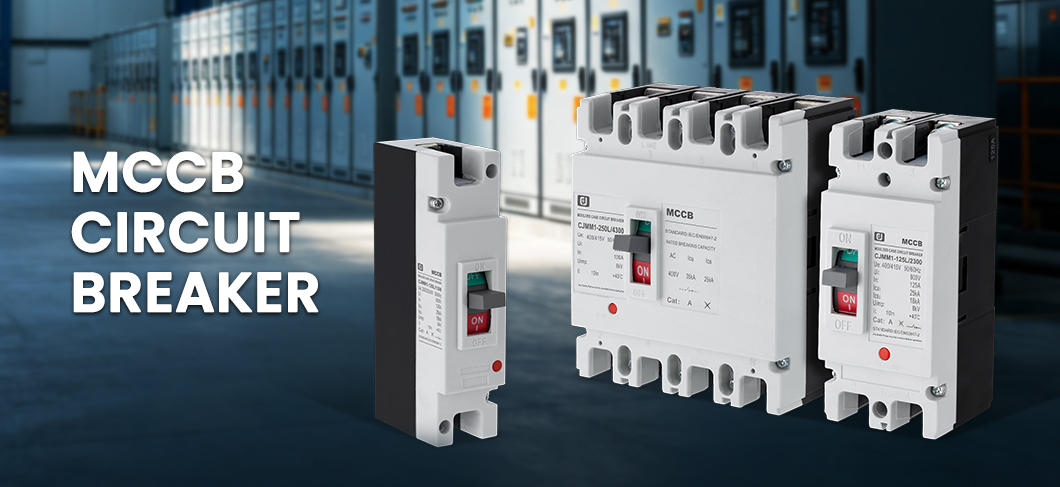
Imagine for a moment the chaos that would ensue if the electrical panel in a factory, a hospital, or even a large office building suddenly failed. Lights would flicker out, life-supporting machines could stop, and critical data centers might go offline. This is where the Moulded Case Circuit Breaker (MCCB) steps in as the silent, ever-vigilant guardian of modern electrical infrastructure. But what exactly is an MCCB, and more importantly, what are the different types available to match your specific needs?
Before diving into the various classifications, let’s establish a solid foundation. An MCCB is a sophisticated protective device designed to automatically interrupt electrical flow when it detects anomalies like overloads or short circuits. Unlike the smaller, more basic fuses or miniature circuit breakers (MCBs) found in your home, MCCBs are built to handle significantly higher currents and offer greater flexibility in their settings. They serve as the workhorses of industrial and commercial power distribution, ensuring safety, protecting expensive equipment, and preventing downtime.
The sheer versatility of MCCBs stems from their diverse classifications. They are not a one-size-fits-all product. Instead, they can be categorized based on several key factors, including their breaking capacity, the technology of their “trip unit” or brain, the number of poles they protect, and their specific tripping curve or application suitability. Let’s unpack each of these categories in detail.
Classifying MCCBs: A Breakdown of Types
1. By Breaking Capacity: The Measure of “Strength”
The breaking capacity of an MCCB is arguably its most critical safety specification. Think of it as the breaker’s physical strength and resilience in the face of a catastrophic electrical event. It defines the maximum level of fault current that the breaker can safely interrupt and clear without being destroyed itself. This is typically measured in kiloamperes (kA). Choosing a breaker with insufficient breaking capacity for the potential fault level of your installation is a recipe for disaster; the breaker could fail to clear the fault, leading to fire, severe equipment damage, or arc flash hazards.
Our CJMM1 Series MCCB is engineered to provide robust protection and is available in two primary breaking capacity levels to suit different installation environments:
- Standard Type (Type S): This is the reliable “everyday hero” for general industrial and commercial applications. It is designed for installations where the prospective short-circuit current is within standard, predictable limits. For example, the CJMM1-100S model offers a rated ultimate short-circuit breaking capacity (Icu) of 35kA. This level is more than sufficient for most standard factory distribution panels, workshop sub-boards, and commercial building power distribution, providing a cost-effective yet highly dependable solution.
- Higher Breaking Capacity Type (Type H): For installations situated close to large power transformers, generators, or utility substations where the potential fault current is significantly higher, the “Type H” breaker is the undisputed heavyweight champion. It provides an enhanced layer of protection and peace of mind. The CJMM1-100H, for instance, steps up the protection with a formidable 50kA breaking capacity. This superior rating makes it the ideal choice for critical main switchboards, power plants, and heavy industrial facilities where the cost of an electrical failure is exceptionally high.
Understanding and correctly selecting the appropriate breaking capacity—both Icu (ultimate) and Ics (service)—is not just a technical detail; it’s a fundamental requirement for ensuring the complete safety and reliability of your entire electrical system.
2. By Trip Unit Technology: The “Intelligence” of the Breaker
If the breaking capacity is the muscle of an MCCB, the trip unit is its brain. It is the sophisticated decision-making core that continuously monitors the electrical current and determines when and how to trigger the interruption mechanism. The type of trip unit you choose will dramatically impact the level of protection, coordination, and diagnostic capability your system possesses.
- Thermal-Magnetic Trip Unit: This is the classic, time-tested technology that serves as the industrious workhorse of the electrical industry. It ingeniously combines two distinct protection mechanisms within a single unit. The thermal element, typically a bimetallic strip, provides protection against overloads. As current increases, the heat generated causes the strip to bend, eventually triggering a trip mechanism after a time delay that is inversely proportional to the overload magnitude. The magnetic element, consisting of a solenoid coil, provides instantaneous short-circuit protection. A short circuit generates a massive, sudden surge of current, creating a powerful magnetic field that instantly pulls a plunger or armature, causing the breaker to trip in milliseconds. This robust, economical, and incredibly reliable solution is perfect for the vast majority of standard applications.
- Electronic Trip Unit: For demanding applications requiring a higher degree of precision, selectivity, and flexibility, the electronic trip unit is the unrivaled “smart” solution. These microprocessor-based units act like a dedicated computer for your circuit. They can be programmed to offer sophisticated, multi-level protection curves, including long-time delay for overloads, short-time delay for selective coordination with downstream breakers, and instantaneous protection for severe faults. This programmability allows engineers to achieve perfect system coordination, ensuring that only the closest breaker to the fault trips, preventing widespread outages. They also offer advanced features like zone-selective interlocking (ZSI) for faster clearance of faults and detailed diagnostic data for system analysis.
3. By Number of Poles: The “Lanes” of Protection
The number of poles in an MCCB dictates how many separate circuits or conductors it can simultaneously monitor and protect. It’s like the number of “lanes” on a highway that the breaker can guard. Selecting the correct pole configuration is essential for matching the breaker to your electrical system’s wiring and application.
- 1-Pole (1P): Protects a single phase conductor. These are rarely used for MCCBs, as most MCCB applications are for two or three-phase systems.
- 2-Pole (2P): Protects both the line and neutral conductors in a single-phase circuit. They are often found in smaller control panels, lighting circuits in larger buildings, or applications where a single-phase load needs robust protection.
- 3-Pole (3P): This is the industry standard for three-phase power distribution, protecting the three phase conductors (L1, L2, L3). It is the most common configuration used to protect motors, industrial machinery, main feeders, and other three-phase loads. It’s the classic “three-lane highway” protector of the commercial and industrial world.
- 4-Pole (4P): This configuration protects three phases and a neutral conductor. It is essential for systems where the neutral is distributed and needs to be switched for safety, particularly in systems with high harmonic content or where ground fault protection is required. Our CJMM1 series is available in these versatile configurations. For 4-pole models, we even offer four different N-pole types (A, B, C, and D) to perfectly handle various neutral requirements, such as switched neutral or always-on neutral.
4. By Trip Curve and Application: The “Personality” of the Trip Unit
This classification, often represented by letters (B, C, D, K, Z), defines the magnetic tripping threshold of the breaker—essentially, its “personality” or sensitivity to short-circuit currents. It dictates at what multiple of the rated current (In) the instantaneous magnetic trip will activate. This is crucial because different electrical loads draw different amounts of startup or inrush current. A breaker with too sensitive a curve may nuisance trip when a large motor starts, while one with too insensible a curve may not protect a sensitive load quickly enough.
- Type B: Trips at 3 to 5 times the rated current (In). With a “gentle” personality, these are the primary choice for residential and light commercial installations, where loads like lighting, heaters, and small appliances are the norm.
- Type C: The “versatile all-rounder,” tripping at 5 to 10 times In. This is the standard for most industrial and commercial power distribution. It strikes the perfect balance between preventing nuisance trips from moderate inrush currents (like from small motors, fluorescent lighting, and transformers) and providing reliable fault protection.
- Type D: The “tough muscle,” tripping at 10 to 20 times In. These breakers are specially designed for circuits with exceptionally high inrush currents, such as those starting large motors, pumps, compressors, welding equipment, and X-ray machines. Their “hardy” personality ensures they can withstand the heavy startup surge without tripping, yet they remain protective.
- Type K: Tripping at 8 to 14 times In. This type is often used for motor protection in industrial environments with very high inrush currents, offering a middle ground between Type C and Type D for specific applications.
Beyond the Types: The CJMM1 Series Advantage
Regardless of which type is perfect for your application, our CJMM1 Series MCCB delivers the unwavering reliability, safety, and performance you demand. Engineered to handle a broad spectrum of currents, from 6A up to 630A, and operating at voltages up to 690V AC, it is an exceptionally versatile solution for any project. Its rugged, impact-resistant construction, featuring finger-protected terminals for operator safety and a fire-resistant housing, ensures a long, trouble-free service life, even in harsh industrial conditions. The clear visual contact position indication provides immediate safety confirmation for maintenance personnel.
We know that each project presents its own unique set of challenges. To address this, we provide extensive OEM/ODM brand customization services. Our products are available in a wide range of specifications for diverse applications, all built with a focus on high safety performance. In addition to MCCBs, we are also a trusted supplier of MCB products for more compact distribution needs. We also offer SKD (Semi-Knocked Down) parts shipping to facilitate easier logistics and local assembly for our partners worldwide.
If you have any further questions or specific requirements, please do not hesitate to contact us. Our team is ready to provide you with professional, tailored support and solutions.
Post time: Aug-17-2026