0%

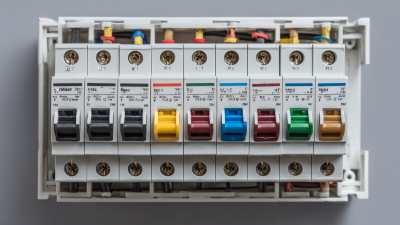
Picking the right RCBO breaker for your home can actually feel pretty overwhelming, right? I mean, with so many options out there, it’s easy to get a bit lost. But hey, as John Smith from Safe Electrical Solutions puts it, "The right RCBO can really save you from unexpected electrical headaches." Basically, an RCBO blends the functions of a Residual Current Device and an MCB, so it keeps your circuits protected from both overloads and earth faults—think of it as a safety combo for your wiring.

When you're choosing one, think about what you really need. Are you wiring up the kitchen, outdoor areas, or something else? Different areas have different requirements, so pick accordingly. And don’t forget, it’s super important to match the RCBO rating to your home’s electrical load. That’s where people often slip up and get into trouble—underestimating can be risky.

Also, don’t skimp on quality. There are tons of brands out there, but not all of them meet the safety standards you want. As John Smith warns, "Investing in a reputable brand pays off in the long run." Going for a trusted name means you’re actually protecting your home and your family. Just take your time, think about what matters most, and don’t rush the decision—better safe than sorry when it comes to electricity, right?

How to Choose the Right Rcbo Breaker for Your Home?

Understanding the Basics of RCBO Breakers

How to Choose the Right Rcbo Breaker for Your Home?

RCBO breakers, or Residual Current Circuit Breakers with Overload protection, are crucial in modern homes. They guard against electric shocks and prevent electrical fires. According to a report by the International Electrotechnical Commission (IEC), electrical accidents account for nearly 20% of all sudden fatalities. Understanding how RCBOs work can drastically reduce these risks.

An RCBO combines the functions of an RCD and an MCB. It protects both against earth faults and overloads. Buildings with older wiring systems may not have adequate protection. In fact, around 30% of homes in older neighborhoods are at risk due to outdated circuit breakers. These homes may require a retrofitted RCBO to enhance safety. Overloading often occurs due to excessive appliances on a single circuit. This can lead to tripped breakers or worse, electrical fires.

Choosing the right RCBO involves considering the electrical load, home layout, and specific needs. Each breaker is rated for a certain current and type of fault. Professionals often suggest consulting detailed data reports to find the right specifications. Misconfigurations can lead to inadequate protection. It's important to reassess existing systems regularly. Many homeowners overlook this, which can lead to dangerous situations.

Identifying Your Home's Electrical Needs

Identifying your home's electrical needs is crucial for selecting the right RCBO breaker. Start by assessing your total power consumption. According to the National Electrical Manufacturers Association, the average American home uses about 877 kWh monthly. This translates to an average of 30 kWh daily. Knowing this helps you gauge your breaker requirements.

It's also essential to evaluate your appliances and their power ratings. For instance, a refrigerator typically consumes between 100 to 800 watts. High-demand devices like air conditioners can exceed 4000 watts. Calculate the combined wattage of devices that may run simultaneously. This can sometimes reveal alarming gaps in your home's current electrical setup.

Moreover, considering future expansions is wise. Home renovations or new devices could increase your load requirements. If you plan to add more electronics, your current setup might not suffice. This thoughtful planning prevents potential overloading issues. Remember, it's okay to adjust your expectations based on your findings. Try to reflect on your current needs versus what you think they might be.

Different Types of RCBO Breakers Explained

How to Choose the Right Rcbo Breaker for Your Home?

When selecting an RCBO breaker, understanding the types is essential. An RCBO combines a residual current device and a circuit breaker. This makes it effective for protecting against both overload and earth faults. There are two main types: single-pole and double-pole breakers. A single-pole is suitable for lighting circuits, while a double-pole is needed for higher current appliances.

It's important to consider the amp ratings. Lower ratings work for smaller circuits, while higher ratings suit larger draws. Additionally, the tripping sensitivity, often marked in milliamps, varies. A higher sensitivity gives better protection against electric shocks. One must also think about installation space. Some homes might lack room for larger breakers, causing installation issues.

Selecting the right type can be overwhelming. Not everyone understands the technicalities. Mistakes can happen. Choosing the wrong breaker can lead to safety hazards. Homeowners should take the time to research and consult professionals. A helpful approach is to review the layout of your home. Make notes on where you need protection and reassess your choices.

Key Features to Look for in an RCBO Breaker

Choosing the right RCBO (Residual Current Circuit Breaker with Overcurrent Protection) for your home is crucial. Key features can greatly impact safety and efficiency. One essential aspect is the rated current, which indicates how much current the breaker can safely handle. A common choice for home settings is 16A to 32A, depending on the household load.

Another vital feature is the tripping sensitivity, often set at 30mA for personal protection. This setting helps prevent electrocution, making it safer for home use. According to industry data, households utilizing RCBOs with 30mA sensitivity have a lower risk of electrical accidents.

Tips: Consider testing your RCBO regularly. A simple push of the test button ensures it functions correctly. Additionally, assess the installation type—some units are suitable for both individual circuits and whole-house systems.

In addition to current ratings and sensitivity, look for features like earth fault protection. This protects your home from potentially dangerous leaks by cutting off the power swiftly. Reports indicate that homes equipped with these comprehensive protections see a significant reduction in electrical fires. Ultimately, while selecting the right RCBO, reflect on your home's unique needs and prioritize safety.

RCBO Breaker Specifications Comparison

This chart provides a comparison of key specifications to consider when selecting an RCBO breaker for your home, including current rating, tripping sensitivity, pole configuration, and total outlets supported.

Assessing Compatibility with Your Electrical System

When choosing an RCBO breaker, compatibility with your electrical system is crucial. Many homes use single-phase systems. According to the National Electrical Code (NEC), residential circuits typically require a maximum of 16 amps. Selecting an RCBO that exceeds this can lead to unnecessary tripping. Understanding your home’s specifications helps in making the right choice.

Evaluating the current rating is another important factor. A report by the Electric Safety Council shows that mismatched breakers are a leading cause of electrical fires. For instance, using a 32-amp RCBO on a 10-amp circuit can lead to overload. Always check the amperage to prevent potential hazards.

Your home’s wiring type also plays a role. If you have older wiring, it may not support newer breakers fully. Some homes with outdated systems face issues when modern RCBOs are installed. Conducting a compatibility assessment before purchasing can save you from costly mistakes. Each system has unique needs that must be acknowledged.

Step-by-Step Guide to Installing an RCBO Breaker

When installing an RCBO breaker at home, pay attention to the details. Start by turning off the main power supply. This step is essential for your safety. Locate the existing circuit breaker panel. Check for enough space to fit the new breaker. Consider using a voltage tester for added safety. This device ensures the panel is completely off.

Before proceeding, identify the right RCBO for your needs. Assess your home’s electrical load. Note the appliances that require protection. Using a breaker with the correct ratings is crucial. Too low, and it may trip frequently. Too high, and it won't protect effectively.

Tips: Always read the installation guide that comes with the RCBO. Familiarize yourself with the wiring process. Don’t rush; take your time to ensure correct connections. Double-check every wire connection to avoid issues. Mistakes can lead to electrical failures or hazards. Remember, safety is always the priority in any electrical project.

Common Issues and Troubleshooting Tips for RCBO Breakers

RCBO breakers play a crucial role in protecting your home’s electrical system. However, like any device, they can face issues. One common problem is nuisance tripping. This happens when the breaker mistakenly shuts off power, often due to sensitivity. If your RCBO frequently trips without obvious cause, check for overloaded circuits or faulty appliances.

Another issue is failure to reset. If your RCBO won’t reset, it could indicate a deeper electrical fault. Inspect the wiring connected to the breaker for any signs of damage. Additionally, ensure there are no short circuits. Sometimes, simply turning off appliances can help narrow down the problem.

Finally, consider regular maintenance. Dust and dirt can accumulate, affecting the performance of your RCBO breaker. Cleaning the panel can sometimes help. However, it’s important to tune into your device’s feedback. If problems persist, it may be time to consult a professional. Remember, understanding these challenges is key to maintaining a safe environment at home.

How to Choose the Right Rcbo Breaker for Your Home? - Common Issues and Troubleshooting Tips for RCBO Breakers

Parameter Description Common Issues Troubleshooting Tips
Current Rating Select according to your home's total load. Frequent trips or failures. Ensure the load does not exceed the breaker’s rating.
Type of RCBO 1-phase vs 3-phase based on your electrical system. Incompatible with existing wiring. Verify compatibility before purchase.
Residual Current Sensitivity 30mA for personal protection, 100mA for equipment. Device malfunctions. Test the devices regularly using the test button.
Installation Location Indoor or outdoor, weatherproofing may be needed. Increased risk of water damage. Use enclosures where necessary.
Brand and Certification Look for reliable brands and certified models. Non-compliance with safety standards. Check for BS 61009 or equivalent certification.

Understanding the Benefits and Features of the Hot Selling Electromagnetic RCBO 63A 6kA Type AC Leakage Protection Circuit Breaker

The Hot Selling Electromagnetic RCBO 63A 6kA Type AC Leakage Protection Circuit Breaker is designed to provide advanced electrical safety features for residential and commercial applications. Adhering to standards such as IEC61009-1 and IEC62423, this circuit breaker combines the functionality of an Earth Leakage Circuit Breaker (ELCB) and a miniature circuit breaker (MCB) into a compact design. The electromagnetic type operates with high reliability, ensuring prompt tripping during fault conditions, significantly reducing the risk of electrical hazards.

With a tripping curve available in B, C, and D types, the RCBO caters to various operational needs, from general household appliances to equipment with high inrush currents. Available in multipole configurations—1P+N, 2P, 3P, 3P+N, and 4P—this circuit breaker supports a wide range of electrical systems. The rated current can be adjusted between 6A and 63A, while the rated residual operating current is selectable at 30mA, 100mA, or 300mA, providing flexibility in different protective scenarios. This ensures that sensitive devices are safeguarded while maintaining performance with essential power demands.

Moreover, studies indicate that implementing circuit protection equipment such as RCBOs substantially decreases the risks of electrical fires and equipment damage due to overloads and ground faults. According to recent industry reports, an effective leakage protection solution can result in a 30% reduction in electrical-related incidents in commercial settings when compared to unprotected systems. The integration of these cutting-edge safety features makes the RCBO not only a vital component for risk management but also an indispensable part of modern electrical installations.

FAQS

: What is the main purpose of the program?

: The program aims to enhance skills and knowledge in specific areas. It focuses on practical applications.

Who can participate in the program?

The program is open to individuals interested in learning and developing expertise. Backgrounds can vary widely.

What is the duration of the program?

The program typically lasts for several weeks. It includes different modules and hands-on activities.

Are there any prerequisites for joining?

Some modules may require basic knowledge. Check the guidelines to understand what is needed.

Will there be assessments during the program?

Yes, assessments are part of the learning process. They help gauge progress and understanding.

Can participants receive certifications?

Certificates may be awarded upon successful completion. This can enhance resumes and professional profiles.

How can feedback be provided?

Participants are encouraged to share feedback. This helps improve future programs.

Is there a cost associated with the program?

Some programs may have fees. Ensure to verify the cost before enrollment.

What resources are available during the program?

Various resources, such as online materials, will be provided. Some may require participants to source additional information.

Can participants network with each other?

Networking opportunities are encouraged. Building connections can lead to future collaborations and support.

Conclusion

When selecting the right RCBO breaker for your home, it is crucial to understand the basics of how these devices function and their significance in electrical safety. Begin by assessing your home’s electrical needs, which can vary based on the number of appliances and the complexity of your wiring. Familiarize yourself with the various types of RCBO breakers available, as they each have unique features suited for different applications.

Key features to consider include the current rating, sensitivity, and the number of circuits supported by the RCBO breaker. Compatibility with your existing electrical system is also vital to ensure optimal performance and safety. To facilitate the installation process, follow a step-by-step guide, and be prepared to troubleshoot any common issues that may arise post-installation. Making informed decisions about your RCBO breaker will enhance your home’s electrical safety and efficiency.

Oliver

Oliver

Oliver is a dedicated professional marketer at Zhejiang Cejia Electric Co., Ltd., where he showcases an exceptional level of expertise in the company's innovative products. With a strong background in electric appliances and energy-efficient solutions, Oliver plays a crucial role in elevating the......
Previous How to Choose the Right DC Breaker for Your Solar Energy System Efficiency