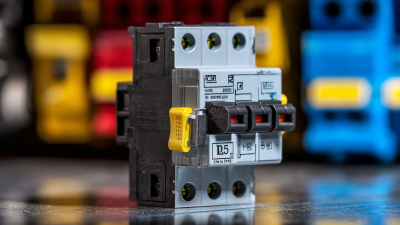
Picking the right MCB breaker can feel pretty overwhelming, right? But, honestly, choosing the correct one is super important if you want your electrical setup to be safe and run smooth. According to the folks at the National Electrical Manufacturers Association (NEMA), circuit breakers are there to stop overloads and protect your appliances—and honestly, your whole infrastructure. That said, did you know that around 30% of electrical issues happen because people pick the wrong breaker? Crazy, huh?
So, understanding amperage ratings is kinda a big deal. Like, for most households, a 16 Amp MCB breaker works pretty well. But, a lot of folks don’t really pay attention to their actual power needs, which isn’t great. The IEC (International Electrotechnical Commission) actually stresses choosing a breaker that matches your load, because if you don’t, it probably keeps tripping and that just wastes time and money in the long run.
And, honestly, quality matters a lot. It’s usually better to go with trusted brands like Schneider Electric or Eaton. Cheaper brands might save you some cash upfront but often cut corners on safety, which is not something you want to mess with. The bottom line? Your choice reflects how serious you are about safety and efficiency in your electrical system. It’s worth taking the time to make an informed decision.

Understanding MCB Breakers: Definition and Purpose
MCB breakers, or miniature circuit breakers, are essential for electrical safety. They automatically cut off the power supply when there is an overload or short circuit. This function protects wiring and devices from damage. According to the National Electrical Manufacturers Association, the demand for MCBs has increased by 15% in recent years due to growing safety concerns.
Choosing the right MCB is vital. Understand the voltage and current ratings needed for your application. Note that MCBs come in different curves, such as B, C, and D. Each curve offers varying tripping characteristics. For instance, type B is ideal for household appliances, while type C suits commercial equipment. You must assess your specific needs carefully.
Tips: Estimate the total load of all devices connected to the circuit. Do not underestimate any appliance's start-up current. It can help avoid nuisance tripping. Always consult with a certified electrician before making choices. Their expertise can save you time and ensure safety. Remember, an improperly selected MCB can lead to serious electrical hazards.
Key Factors to Consider When Choosing an MCB Breaker
Choosing the right MCB (Miniature Circuit Breaker) requires careful consideration of several key factors. The primary factor is the current rating, which is typically expressed in amps. For residential applications, a common choice is a 16A or 20A breaker. However, industrial applications may require higher ratings, often reaching 63A or more. According to industry reports, inadequate sizing can lead to frequent tripping or electrical fires.
Another crucial aspect is the breaking capacity. This refers to the maximum fault current the MCB can interrupt. For residential use, a breaking capacity of 6kA is standard. However, commercial and industrial environments might require breakers rated for 10kA or higher. Proper assessment of the electrical load is essential to avoid oversizing or undersizing, both of which have risks.
Tip: Always consult a qualified electrician to evaluate your specific needs. They can analyze your electrical system.
The type of MCB is also significant. This can include Type B for general residential circuits and Type C for inductive loads. Still, selecting the wrong type may leave your system vulnerable. Regularly review your MCB choices against your current usage patterns.
Tip: Monitor the performance of your MCB after installation. Noticing any irregularities can prevent costly repairs later.
Types of MCB Breakers and Their Applications
When selecting the right MCB (Miniature Circuit Breaker), understanding the different types can significantly enhance safety and efficiency. MCBs are categorized mainly into Type B, C, and D. Type B breakers trip at 3 to 5 times the rated current. They are ideal for residential circuits. These breakers protect against overloads and short circuits commonly found in lighting and socket circuits. According to industry data from the IEC, Type B breakers account for about 70% of the MCB market in residential applications.
Type C breakers trip at 5 to 10 times the rated current and are often used in commercial settings. They suit loads with high inrush currents, such as motors or transformers. For industrial applications, Type D breakers are suitable, tripping at 10 to 20 times the rated current. They protect equipment with very high start-up currents, such as large motors. A recent Schneider report noted that Type C and D breakers represent approximately 25% and 5% of the market, respectively. Choosing the correct type ensures reliability and minimizes equipment damage.
Installation and selection require careful consideration of the specific application. Some users may underestimate inrush currents, leading to incorrect choices. This often results in nuisance tripping or inadequate protection. Understanding the load characteristics assists in making informed decisions. Proper sizing can prevent costly repairs and system failures, a crucial factor highlighted in various engineering analyses.
Calculating the Load Requirements for Your MCB
Choosing the right MCB (Miniature Circuit Breaker) requires careful consideration of your load requirements. Understanding your electrical needs is crucial for safety and efficiency. Start by calculating your total load, which is the sum of all connected devices and their power ratings. This figure will guide you in selecting an appropriate MCB rating.
It’s essential to know that MCBs are rated in amperes. If your total load is 20 amps, you should look for an MCB that can handle slightly more than this. An MCB that is too low can trip frequently, disrupting your appliances. An excessively high rating may compromise safety.
Tips: Consider adding a margin to your total load calculation. This margin can account for future expansions or unexpected surges. Keep in mind that device startup currents can be significantly higher than their running currents. Do not forget to check the characteristics of the MCB, like its tripping curve. It affects how fast the MCB responds to overloads or short circuits. Balancing safety with the right specifications is key to choosing the perfect MCB for your needs.
Safety Standards and Certifications for MCB Breakers
When selecting an MCB (Miniature Circuit Breaker), understanding safety standards and certifications is crucial. These standards ensure that the device can handle electrical loads without hazard. Common certifications include IEC 60898 and UL 1077. Both assure that the MCB will trip under overload or short circuit conditions.
Choosing an MCB that meets these standards is essential for residential or commercial use. Look for devices that display these certifications clearly. It's tempting to overlook these details, but ignoring them can result in dangerous situations. For instance, an uncertified breaker may fail to trip during a short circuit, leading to electrical fires.
An MCB's reliability depends on its compliance with safety standards. Always consider the manufacturer's reputation. While some may promise high performance, if they lack certifications, the risks outweigh the benefits. Reliable products usually come from established manufacturers with a solid track record. Make informed choices to ensure your electrical safety.
Installation Guidelines for MCB Breakers
When installing MCB (Miniature Circuit Breaker) breakers, understanding electrical systems is crucial. Each installation must meet specific load requirements. According to the National Electrical Code (NEC), the correct rating prevents overloads. Typically, MCBs are rated between 6A to 63A. Choosing the wrong rating can lead to frequent tripping or insufficient protection.
Proper placement and spacing are essential in installation. MCBs should be installed in a dry, cool area. They need adequate ventilation to avoid overheating. Data from the International Electrotechnical Commission (IEC) indicates that poor installation can reduce lifespan by up to 30%. It's essential to secure jumpers and ensure tight connections. Loose wiring can create arcing, a fire risk.
Documentation and labeling should never be neglected. This helps in future maintenance and safety checks. Non-compliance can lead to serious hazards. Industry reports highlight that 20% of electrical fires are due to improper installations. Regular checks are necessary, even for new installations. Reflecting on this can prevent costly repairs and enhance safety.
How to Choose the Right MCB Breaker for Your Needs?
Maintenance Tips for Optimal Performance of MCB Breakers
Maintaining MCB breakers is essential for optimal performance. Regular inspection is key. Check for any signs of wear or damage. Look for loose connections or corrosion. These issues can affect the breaker’s efficiency. Keeping a tidy electrical panel aids in quick visual checks. Cleanliness promotes better airflow and reduces the risk of overheating.
Routine testing is necessary. Simulate overload conditions monthly to ensure MCBs function correctly. This testing can reveal potential problems before they escalate. Additionally, consider the environment where the breakers are installed. High humidity or extreme temperatures can impact their performance. Protective enclosures can mitigate these environmental risks.
Documentation plays a crucial role. Maintain a log of all maintenance activities. Record tests performed and issues found. This practice not only helps in tracking performance but also demonstrates responsible management. Reflecting on these routines can lead to improved safety standards and reliability in your electrical systems.
How to Choose the Right Mcb Breaker for Your Needs? - Maintenance Tips for Optimal Performance of MCB Breakers
| Parameter |
Description |
Importance |
Recommendation |
| Current Rating |
The maximum load current that can pass through the MCB. |
Ensures the safety and efficiency of the electrical system. |
Choose based on the total load current of the circuits you are protecting. |
| Tripping Curve |
Defines the response time of the MCB under overload or short circuit conditions. |
Critical for preventing equipment damage during faults. |
Select a curve (B, C, D) based on the load type (resistive, inductive, etc.). |
| Number of Poles |
Indicates how many phases the MCB will protect. |
Ensures complete protection for single-phase or three-phase systems. |
Choose based on the number of phases in your electrical system. |
| Type of Load |
The nature of the load (inductive, capacitive, etc.). |
Affects the choice of MCB to ensure proper operation. |
Assess the type of load before choosing the MCB type (e.g., C for motor loads). |
| Environmental Conditions |
Factors like humidity, temperature, and exposure to dust. |
Affects the lifespan and reliability of the MCB. |
Select MCBs rated for the specific environmental conditions. |
FAQS
: The main types of MCBs are Type B, Type C, and Type D. Each serves different load applications.
Use a Type B MCB for residential circuits. It trips at 3 to 5 times the rated current.
Type C MCBs are suitable for commercial settings, handling high inrush currents like motors.
Type D MCBs trip at 10 to 20 times the rated current, ideal for large motors with high start-up currents.
Sum the power ratings of all connected devices. Ensure the MCB rating exceeds this total load slightly.
Regular maintenance ensures optimal performance and early detection of issues. It reduces risks of system failures.
Inspect for wear, loose connections, or corrosion. These can impact the efficiency of the MCB.
Add a margin to your total load calculation for future expansions or unexpected surges.
Humidity and extreme temperatures can affect MCB performance. Proper enclosures help mitigate these risks.
Keep a log of maintenance activities, tests conducted, and issues found for better management and tracking.
Conclusion
When selecting the right MCB breaker for your needs, it’s essential to understand its definition and purpose. MCB (Miniature Circuit Breaker) breakers are crucial for protecting electrical circuits from overloads and short circuits. Key factors to consider when choosing an MCB include the type of electrical load, required current rating, and the specific application in which it will be used. Familiarizing oneself with the different types of MCB breakers and their applications can significantly enhance safety and efficiency.
Calculating the load requirements accurately is vital for ensuring that the chosen MCB breaker can handle the expected electrical demand. Additionally, understanding the safety standards and certifications that govern MCB breakers is crucial for compliance and reliability. Proper installation and regular maintenance are imperative for optimal performance, ensuring that the MCB breaker functions effectively and safely over time. Adhering to these guidelines will help you make an informed decision in selecting the right MCB breaker for your electrical system.